
Math 100: Introduction to Calculus [2nd Sem AY 2020-2021]
Limits, continuity, derivatives, differentials, antiderivatives, definite integrals and their applications to management, business and economics
Math 111: Abstract Algebra I [2nd Sem AY 2020-2021]
Groups, subgroup, cyclic groups, abelian groups, normal subgroups, quotient groups and homomorphism and isomorphism theorem, rings, integral domains, integral domains, fields, ring homomorphisms, ideals, and field of quotients.
Math 11 - College Algebra
Real Number Systems, Algebraic Expressions, One- and Two-Dimensional Coordinate Systems, Functions, Equations and Inequalities, Word Problems and Variations

STAT 101: Elementary Statistics for BA Communication
This introductory course in Statistics will provide you a background on conducting a statistical inquiry that is essential for performing research works. The basic concepts in Descriptive Statistics and Inferential Statistics are systematically and comprehensively presented in this course to guide you in designing a research study.

Math 40 - Calculus for the Life Sciences
Limits, continuity, derivatives, integrals, separable differential equations and their application to life sciences
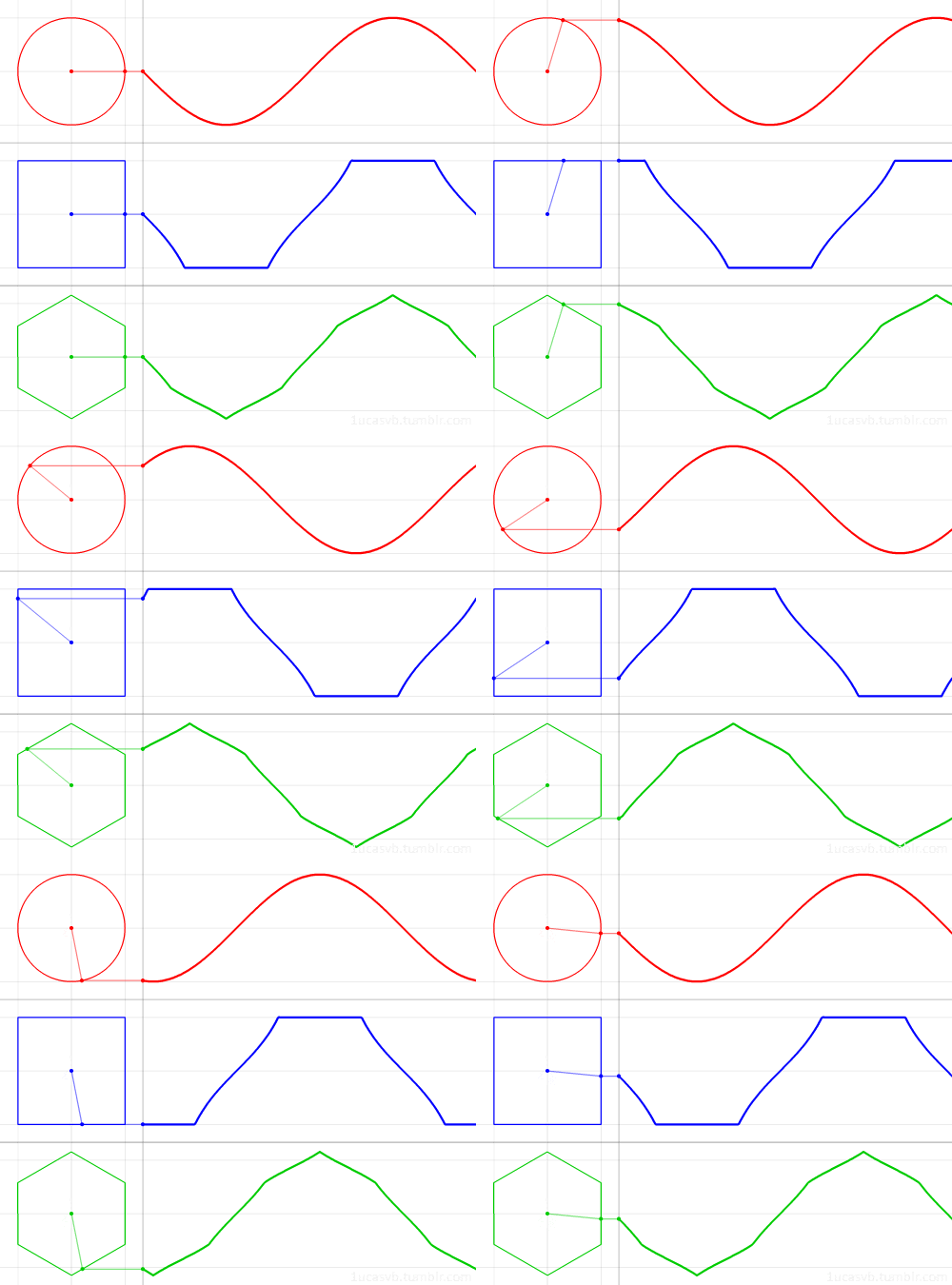
MATH 11 College Algebra
Real Number Systems, Algebraic Expressions, One- and Two-Dimensional Coordinate Systems, Functions, Equations and Inequalities, Word Problems and Variations

Stat 101 - Elementary Statistics
Presentation of data; frequency distribution; measures of central tendencies; measures of dispersion; probability distributions; sampling distributions; statistical inference; regression and correlation

Stat 123 Probability and Statistics (for Computer Science Majors)
Probability and Statistics play an essential role in understanding the basic concepts of
Computer Science needed to build innovations. This ranges from describing the data of
occurring events, determining the probability of events to happen, estimation of parameter
measures, determining the association of variables under study, and up to performing
hypothesis tests for parameters under research works.
This introductory course in Probability and Statistics will provide you a background on
understanding the statistical concepts needed for applying statistics on Computer Science
research and innovations appropriately. The basic concepts of Probability and Statistics are
systematically and comprehensively presented in this course to guide you in developing
computational applications.

Stat 101: Elementary Statistics (for Political Science Majors)
Statistical literacy is essential in deriving useful information needed for understanding
day-to-day events. As a responsible citizen and as a scholar, you will begin to ask
questions and find solutions for some research problems. Statistics as an art and science
offers a systematic way of resolving research problems involving data collection,
organization, analysis, interpretation, and presentation of data. This introductory course
in Statistics will provide you a background on conducting a statistical inquiry that is
essential for performing research works. The basic concepts in Descriptive Statistics
and Inferential Statistics are systematically and comprehensively presented in this
course to guide you in designing a research study.

Stat 104
Stat 104 is titled Descriptive Statistics. It is your first course in Statistics. Please see attached for the syllabus of this course.
STAT 123 Probability and Statistics
Probability and probability distributions, sampling distributions, estimation, hypothesis testing

Math 53 - Elementary Analysis I
Limits, continuity, derivatives and their applications, differentials, antiderivatives, definite integrals and their applications

College Algebra (Supplemental)
Real Number Systems, Algebraic Expressions, One- and Two-Dimentional Coordinate Systems, Functions, Equations and Inequalities, Word Problems and Variations